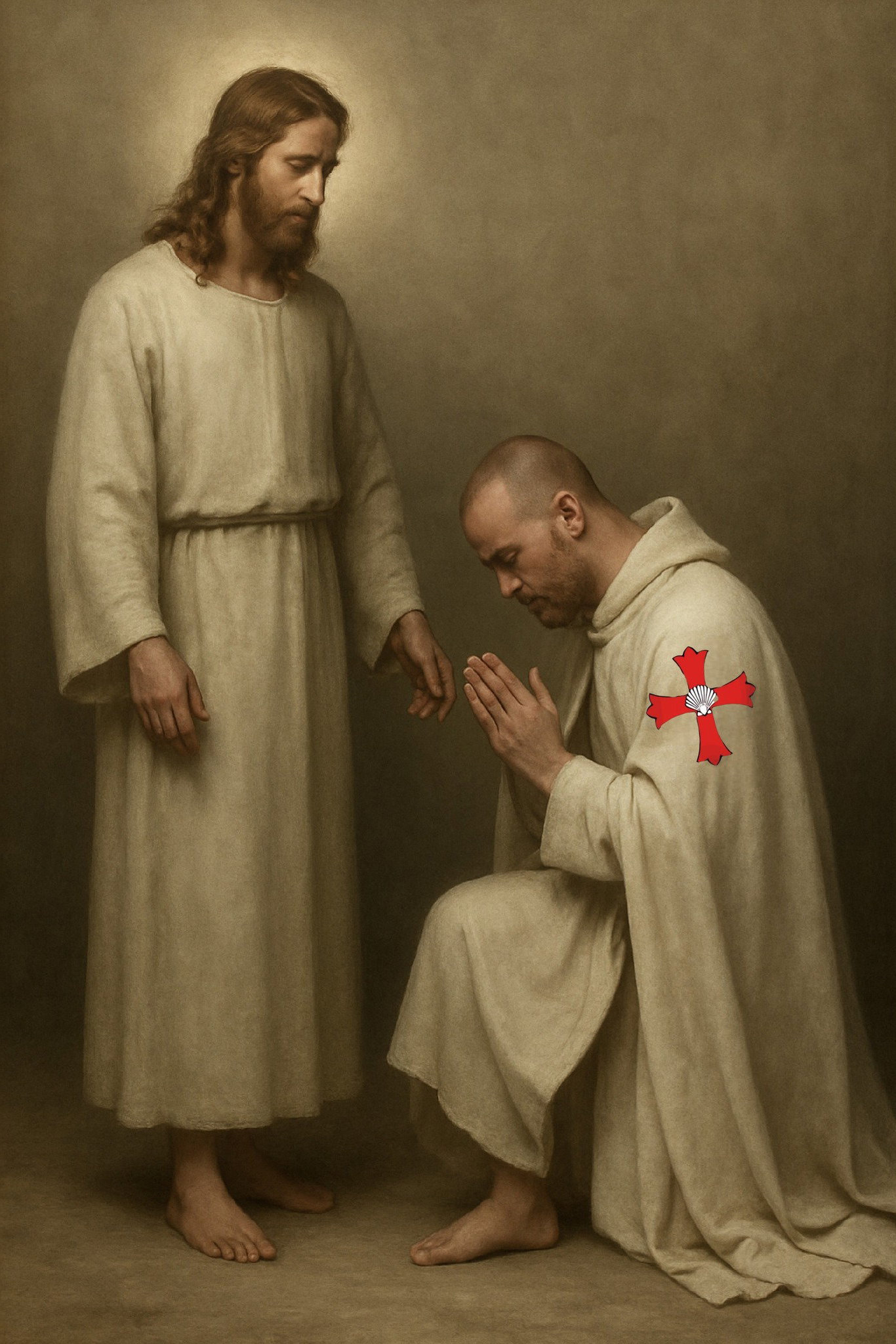
Jesus and the Meaning of Chivalry
Throughout the history of Christian chivalry, the figure of Jesus has stood at the heart of the ideals that inspired knights to serve God, protect the innocent and live according to a higher moral standard. Although the medieval code of chivalry developed within a particular historical and cultural context, many of its noblest principles can be understood through the teachings and example of Jesus.
For the Christian knight, chivalry was never intended to be merely about military skill, honour or social status. At its deepest level, it was a call to faith, courage, humility, justice, compassion and service. These virtues find their foundation in the life and teachings of Jesus.
Jesus as the Model of Christian Virtue
The teachings of Jesus presented a radically different understanding of strength. True greatness was not measured by power over others, wealth or prestige, but by the willingness to serve.
In the Gospel of Matthew, Jesus teaches:
"Whoever wants to become great among you must be your servant."
This principle has profound significance for the Christian understanding of chivalry. A knight was expected to use his position and abilities not simply for personal advancement, but for the good of others. The higher one's rank, the greater one's responsibility to serve.
The ideal Christian knight therefore understood that honour was inseparable from responsibility. Courage without humility could become arrogance, while power without compassion could become oppression. The teachings of Jesus reminded the Christian warrior that true strength was demonstrated through self-control, mercy and service.
Courage in the Face of Adversity
One of the defining qualities associated with chivalry is courage. Medieval knights were expected to face danger and adversity without abandoning their duty. Yet Christian courage is more than physical bravery.
Jesus demonstrated courage throughout His life. He stood firmly for truth, defended the vulnerable and remained faithful to His mission even in the face of suffering and persecution. His courage was not based upon hatred or revenge, but upon obedience to God and love for humanity.
For the Christian knight, this provides an important lesson. Courage means standing for what is right even when doing so is difficult. It means defending truth when it is unpopular, protecting those who cannot protect themselves and remaining faithful to one's principles in times of uncertainty.
The true knight does not seek conflict for its own sake. Instead, he seeks peace through justice, while possessing the courage necessary to defend the innocent when peace is threatened.
"Blessed Are the Merciful"
Mercy is one of the most important virtues in the teachings of Jesus.
In the Beatitudes, He declares:
"Blessed are the merciful, for they will be shown mercy."
This teaching offers a powerful challenge to the traditional image of the warrior. The knight was expected to be strong, but strength was never meant to eliminate compassion.
Christian chivalry teaches that a person of honour must recognise the dignity of every human being. Mercy should be shown to the weak, the poor, the sick, the prisoner and those who have fallen.
This does not mean abandoning justice. Rather, Christian chivalry seeks to unite justice with mercy. A knight must be prepared to defend what is right while remembering that every person is created in the image of God.
The Defence of the Weak and Vulnerable
The protection of the vulnerable became one of the most enduring ideals associated with Christian knighthood.
The teachings of Jesus place great emphasis on caring for those who are often overlooked by society. He repeatedly reached out to the poor, the sick, the outcast and those in need. His ministry demonstrated that service to others is an essential expression of faith.
This principle became deeply connected with the traditions of Christian chivalry. The knight was expected to defend those who could not defend themselves and to use his strength for the benefit of others.
The Christian knight therefore asks not simply, "What can I gain?", but "Whom can I serve?" This change in perspective transforms chivalry from a code of personal prestige into a vocation of service.
The Golden Rule and the Knightly Code
One of the most widely recognised teachings of Jesus is often called the Golden Rule:
"Do to others as you would have them do to you."
This principle provides a simple but profound foundation for ethical behaviour.
A knight who follows this teaching must consider the dignity and wellbeing of others before acting. It encourages honesty, courtesy, respect and fairness. It reminds us that true honour is not about how others treat us, but about how we choose to treat them.
In the context of modern Christian chivalry, the Golden Rule remains highly relevant. It can guide relationships between members of an Order, interactions with the wider community and the treatment of people from different backgrounds and traditions.
Chivalry, when rooted in the teachings of Jesus, becomes a daily commitment to respect, kindness and integrity.
Humility: The Opposite of Pride
Medieval society often placed great importance on rank, titles and status. Yet the teachings of Jesus repeatedly emphasise humility.Jesus Himself demonstrated humility through His actions. He taught His followers that greatness comes through service and that those who exalt themselves will ultimately be humbled.
For a knight, this is a crucial lesson. Titles and decorations may recognise service, but they do not make a person virtuous. A medal may honour an achievement, but it cannot replace character.
The true measure of a Christian knight is therefore not the number of honours he possesses, but the quality of his life and his willingness to serve others.
Humility gives meaning to honour.Without humility, chivalry can become little more than ceremony. With humility, ceremony becomes an expression of a deeper commitment to faith and service.
Forgiveness and Reconciliation
Jesus placed extraordinary emphasis on forgiveness. His teachings challenge His followers to forgive others and to seek reconciliation rather than allowing hatred and resentment to dominate their lives.This principle has an important place within the Christian tradition of chivalry.
The knightly ideal is sometimes associated with defending one's honour, but Christian chivalry offers a higher understanding of honour. True honour does not require endless retaliation. It requires the wisdom to know when to defend justice and when to extend forgiveness.
A Christian knight should therefore strive to be a person who builds bridges rather than creating divisions. Where conflict exists, he should seek reconciliation whenever possible. Where forgiveness is appropriate, he should have the courage to offer it.
This is not weakness. It is a demonstration of spiritual strength.
"Love Your Enemies"
Perhaps one of the most challenging teachings of Jesus is the command to love one's enemies and pray for those who persecute you.
This teaching distinguishes Christian chivalry from a purely secular warrior code.
The Christian knight may be called to resist evil, defend the innocent and stand against injustice. However, he must never allow hatred to become the foundation of his actions.The enemy remains a human being, and therefore possesses dignity. The Christian response to evil should seek justice without surrendering to hatred.
This principle requires extraordinary discipline. It asks the knight to distinguish between opposing an action and hating a person.In this sense, the teachings of Jesus transform the concept of the warrior. The ultimate goal is not victory over another human being, but the triumph of truth, justice and peace.
The Cross and the Meaning of Sacrifice
At the centre of Christianity stands the Cross.For Christians, the Cross represents the supreme example of sacrifice, obedience and love. Jesus willingly accepted suffering in fulfilment of His mission, demonstrating that true love is prepared to make sacrifices for the good of others.
This understanding of sacrifice became central to the spiritual imagination of Christian knighthood.The knight was expected to place duty above personal comfort and service above selfish ambition. He was called to sacrifice time, resources and personal interests for the benefit of others.
The Cross therefore reminds the Christian knight that honour is not about receiving recognition. It is about being willing to give.The highest form of Christian chivalry is selfless service.
Chivalry as a Living Christian Commitment
The teachings of Jesus remain relevant to chivalry because they provide a moral foundation that extends beyond any particular historical period.
Today, Christian chivalry does not require a person to live in a medieval castle or carry a sword. Its principles can be lived in everyday life.
A modern Christian knight can demonstrate chivalry by:
- defending those who are vulnerable;
- serving the poor and those in need;
- speaking the truth with courage and charity;
- treating every person with dignity and respect;
- practising forgiveness;
- showing humility;
- protecting Christian values;
- promoting peace and reconciliation;
- giving generously of time and resources;
- remaining faithful to God in daily life.
These actions demonstrate that chivalry is not merely a historical tradition. It can be a living expression of Christian discipleship.
Jesus and the Christian Knight Today
The image of the knight has evolved throughout history, but the fundamental question remains the same: What does it mean to live a life of honour?
For the Christian knight, the answer begins with Jesus.Jesus teaches that greatness is found in service, strength is perfected through humility, courage must be guided by truth, justice must be accompanied by mercy and honour must be rooted in love.
The Christian knight is therefore called to become more than a defender of an institution or tradition. He is called to become a defender of the values that Christ taught: faith, hope, charity, justice, mercy and peace.The sword may have disappeared from the hands of modern knights, but the spiritual battle for truth and goodness continues.
The greatest knight is not the one who seeks glory for himself, but the one who quietly serves others. Not the one who demands honour, but the one who gives honour to others. Not the one who seeks power, but the one who uses whatever power he possesses to protect and serve.In the end, the deepest meaning of Christian chivalry can be found in the example of Jesus Himself.
To follow Jesus is to serve.
To serve is to love.
And to love is the highest expression of true Christian chivalry.